
Exforge Hct | Amlodipine Valsartan And Hydrochlorothiazide Tablet while Breastfeeding
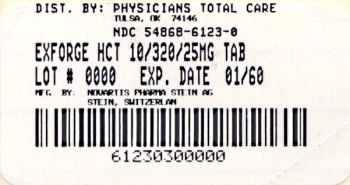
What is Exforge Hct | Amlodipine Valsartan And Hydrochlorothiazide Tablet used for?
Can I continue breastfeeding if I am using Exforge Hct | Amlodipine Valsartan And Hydrochlorothiazide Tablet? How long does it stays in breast milk?
8.3 Nursing Mothers It is not known whether amlodipine and valsartan are excreted in human milk, but thiazides are excreted in human milk and valsartan is excreted in rat milk. Because of the potential for adverse effects on the nursing infant, a decision should be made whether to discontinue nursing or discontinue the drug, taking into account the importance of the drug to the mother.
Exforge Hct | Amlodipine Valsartan And Hydrochlorothiazide Tablet Breastfeeding Analsys
Amlodipine while Breastfeeding
Low RiskCAS Number: 111470-99-6
It is excreted into breast milk in small amount (less than 10% of relative dose) without problems observed in infants whose mothers were on treatment with this drug. (Naito 2015, Ahn 2007)When measured, the plasma levels of drug in these infants were undetectable (Vasa 2013). Because its drug elimination period is very prolonged, an alternative drug known to be safer should be used, especially during the neonatal period and in case of premature infant.
Valsartan while Breastfeeding
Low RiskCAS Number: 137862-53-4
At latest update, relevant published data on excretion into breast milk were not found. A high protein-binding capacity makes excretion into breast milk unlikely. In addition, a low oral bioavailability makes difficult the absorption towards the infant's plasma from ingested milk, except in prematures or newborns who may show an increased absorption. Case report of kidney function impairment of a baby whose mother had taken Telmisartan in pregnancy. Until more data on this medication is available, safer alternative drugs are preferred, especially in premature babies or during the neonatal period. Should an ARA-II medication (Sartan type) be necessary, the associated risk may be decreased by choosing the one with a favorable pharmacokinetics (shorter half-life elimination time and lower bioavailability) like Eprosartan and Losartan
Hydrochlorothiazide while Breastfeeding
SafeCAS Number: 58-93-5
Thiazide diuretic drug. Excretion into breast milk is clinically non-significant. No side-effects were observed in a one-month old breastfed baby whose mother was treated with this medication. Drug level in the plasma of this child was undetectable. Long-term treatment with diuretic drugs (particularly Thiazide type ones with long-lasting effect and loop-acting mechanism) may inhibit lactation, mostly if lactation is not well-established yet. Use as lower dose as possible, especially during the first postnatal month. American Academy of Pediatrics 2013: Maternal Medication Usually Compatible With Breastfeeding. WHO Model List of Essential Drugs 2002: Compatible with breastfeeding.
Exforge Hct | Amlodipine Valsartan And Hydrochlorothiazide Tablet Breastfeeding Analsys - 2
Amlodipine while Breastfeeding
CAS Number: 88150-42-9
Limited information indicates that milk levels of amlodipine are usually low and plasma levels in breastfed infants are undetectable. Maternal use of amlodipine during breastfeeding has not caused any adverse effects in breastfed infants. If amlodipine is required by the mother, it is not a reason to discontinue breastfeeding.
Valsartan while Breastfeeding
CAS Number: 137862-53-4
Because no information is available on the use of valsartan during breastfeeding, an alternate drug may be preferred, especially while nursing a newborn or preterm infant.
Hydrochlorothiazide while Breastfeeding
CAS Number: 58-93-5
Hydrochlorothiazide doses of 50 mg daily or less are acceptable during lactation. Intense diuresis with large doses may decrease breastmilk production.
What should I do if I am breastfeeding mother and I am already exposed to Exforge Hct | Amlodipine Valsartan And Hydrochlorothiazide Tablet?
Exforge Hct | Amlodipine Valsartan And Hydrochlorothiazide Tablet is in the category of low risk, if you have already used it then its not a big deal if health and behavior of baby is good. However your health care provider shall be aware of the fact that you have used Exforge Hct | Amlodipine Valsartan And Hydrochlorothiazide Tablet so you should inform him based on your convenience.
My doctor has prescribed me Exforge Hct | Amlodipine Valsartan And Hydrochlorothiazide Tablet, what should I do?
Though Exforge Hct | Amlodipine Valsartan And Hydrochlorothiazide Tablet dose not comes in category of safe drugs rather it comes in category of low risk but if your doctor is aware that you are breastfeeding your baby and has still recommended it then its advantages must be outweighing the risks.
If I am using Exforge Hct | Amlodipine Valsartan And Hydrochlorothiazide Tablet, will my baby need extra monitoring?
Not much monitoring required while using Exforge Hct | Amlodipine Valsartan And Hydrochlorothiazide Tablet
Who can I talk to if I have questions about usage of Exforge Hct | Amlodipine Valsartan And Hydrochlorothiazide Tablet in breastfeeding?
US
National Womens Health and Breastfeeding Helpline: 800-994-9662 (TDD 888-220-5446) 9 a.m. and 6 p.m. ET, Monday through Friday
UK
National Breastfeeding Helpline: 0300-100-0212 9.30am to 9.30pm, daily
Association of Breastfeeding Mothers: 0300-330-5453
La Leche League: 0345-120-2918
The Breastfeeding Network supporter line in Bengali and Sylheti: 0300-456-2421
National Childbirth Trust (NCT): 0300-330-0700
Australia
National Breastfeeding Helpline: 1800-686-268 24 hours a day, 7 days a week
Canada
Telehealth Ontario for breastfeeding: 1-866-797-0000 24 hours a day, 7 days a week