
Umcka Allergy And Sinus while Breastfeeding
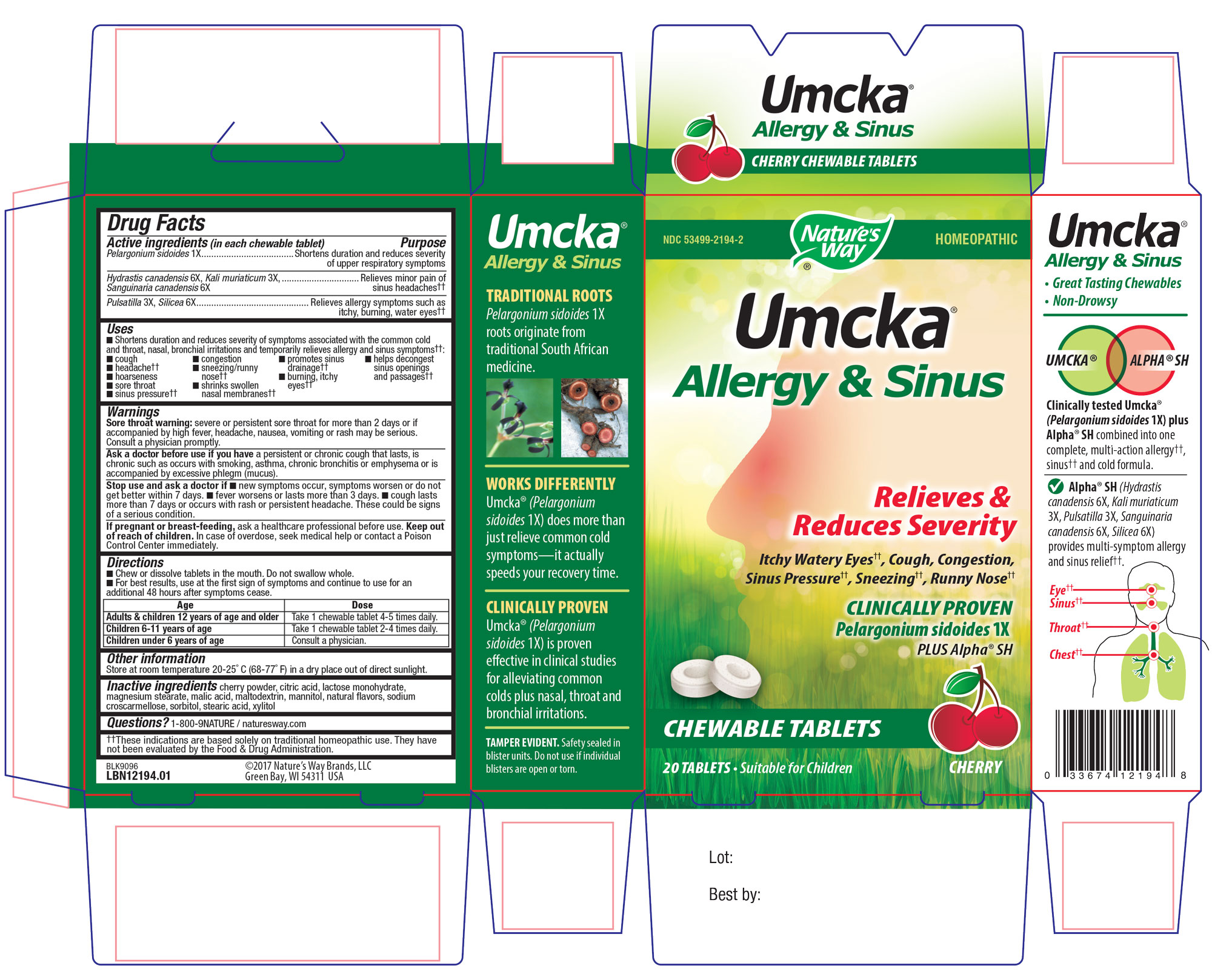
What is Umcka Allergy And Sinus used for?
Is Umcka Allergy And Sinus usage safe while breastfeeding? If a lactating mother is using it can there be any effect on growth or development of infant?

Umcka Allergy And Sinus Breastfeeding Analsys
Hydrastis canadensis whole while Breastfeeding
Low RiskThis plant belongs to Ranunculaceae (Buttercup) family. Rhizomes are used. It contains benzyl-iso-quinoleinic- type alkaloids like Hydrastine, Berberine and Protoberberine. The Commission E of German Ministry of Health does not recognize any effectiveness of it. Popularly used as healing agent, vein-protector, stomachic, and antiseptic on varicose vein, hemorrhoids and oral sores. No problem when topically used. When taken by mouth it may induce blood hypertension and others side effects attributable to Berberine. (See Oregon grape and Barberry) See below the information of these related products:
Potassium chloride while Breastfeeding
SafeCAS Number: 7447-40-7
Human milk has a potassium concentration of 13 meq/L, almost a half of rehydration solution content and a quarter of maximal IV recommended dose. Potassium supplementation does not alter milk concentration without increasing mother’s serum concentration, which is strictly limited from 3,5 to 5,5 meq/L.
Silicon dioxide while Breastfeeding
SafeA polymer made out of silicon-oxygen-methyl combination with a high molecular weight, water repellent and low superficial tension. It is used in many ways (dimethicone, simethicone, -see specific items)orally to treat infant colic and flatulence; as pediculicide, in cosmetic creams and lotions and skin protectants as to prevent ulcers and scars; arthroplasties, retinal detachments and reconstruction or cosmetic surgery as injections and implants. Silicone is widely distributed in our environment with several cosmetic and medicinal uses. No evidence of toxicity on human tissues has been shown. A 1994 report on immunological side effects in infants breastfed by mothers with silicone implants, was denied categorically by means of meta-analysis and other work. The absorption by oral or dermal route is negligible. Both a high molecular weight and polymer molecular structure make it practically impossible excretion in the milk and hence a significant amount of intestinal absorption by the infant. Those circumstances make silicone implants safe for lactation even if broken or manufacturing fault (Poly Implant Prothèse, PIP). After extensive analysis of such silicone prosthesis, where lack of health risk was demonstrated, it can be concluded that many of the initial recommendations published lacked scientific validity, including that carriers of such prosthesis should not breastfeed. Silicon levels in blood and milk of women with implants (55 ng / ml) are similar to those of women without implants (51 ng / ml), 13 times lower than that found in cow's milk (709 ng / ml) and 80 times lower than in commercial infant formulas (4403 ng / ml). American Academy of Pediatrics: Product usually compatible with breastfeeding. To view other possible effects on breastfeeding of breast implant unrelated to silicone, see the term 'Augmentation Mammoplasty'. See below the information of these related products:
Umcka Allergy And Sinus Breastfeeding Analsys - 2
Pulsatilla vulgaris while Breastfeeding
Pulsatilla (Anemone pulsatilla and other related species) contains ranunculin, protoanemonin, and anemonin as well as triterpene saponins and flavonoids. The fresh plant is extremely irritating to the skin, gastrointestinal tract and mucous membranes. Allergic reactions have been reported to pulsatilla. Homeopathic preparations of pulsatilla are reportedly used for sore nipples and mastitis,[1] to reduce an overabundant milk supply,[2] or to increase milk supply.[3] Galactogogues should never replace evaluation and counseling on modifiable factors that affect milk production.[4] No scientifically valid clinical trials support either of these uses. Because of a lack of information, other agents may be preferred in nursing mothers. Dietary supplements do not require extensive pre-marketing approval from the U.S. Food and Drug Administration. Manufacturers are responsible to ensure the safety, but do not need to the safety and effectiveness of dietary supplements before they are marketed. Dietary supplements may contain multiple ingredients, and differences are often found between labeled and actual ingredients or their amounts. A manufacturer may contract with an independent organization to verify the quality of a product or its ingredients, but that does certify the safety or effectiveness of a product. Because of the above issues, clinical testing results on one product may not be applicable to other products. More detailed
Umcka Allergy And Sinus Breastfeeding Analsys - 3
Pulsatilla vulgaris and Breastfeeding
Low RiskNote: Mostly safe in Homeopathic preparations
What should I do if already breastfed my kid after using Umcka Allergy And Sinus?
Due to high dilution of ingredients in homeopathic medicines they do not create much problem for baby. Umcka Allergy And Sinus is a homeopathic medicine and if your baby does not have any abnormal symptoms then there is nothing to worry about. Be careful with too much usage of ethanol based homeopathic medicines during breastfeeding.
I am nursing mother and my doctor has suggested me to use Umcka Allergy And Sinus, is it safe?
Homeopathic medicines are usually safe in breastfeeding and if Umcka Allergy And Sinus has been recommended by doctor then there should be no concern about its usage in breastfeeding.
If I am using Umcka Allergy And Sinus, will my baby need extra monitoring?
Not exactly.
Who can I talk to if I have questions about usage of Umcka Allergy And Sinus in breastfeeding?
US
National Womens Health and Breastfeeding Helpline: 800-994-9662 (TDD 888-220-5446) 9 a.m. and 6 p.m. ET, Monday through Friday
UK
National Breastfeeding Helpline: 0300-100-0212 9.30am to 9.30pm, daily
Association of Breastfeeding Mothers: 0300-330-5453
La Leche League: 0345-120-2918
The Breastfeeding Network supporter line in Bengali and Sylheti: 0300-456-2421
National Childbirth Trust (NCT): 0300-330-0700
Australia
National Breastfeeding Helpline: 1800-686-268 24 hours a day, 7 days a week
Canada
Telehealth Ontario for breastfeeding: 1-866-797-0000 24 hours a day, 7 days a week