
Numb520 | Lidocaine Hydrochloride, Phenylephrine Hydrochloride Spray while Breastfeeding
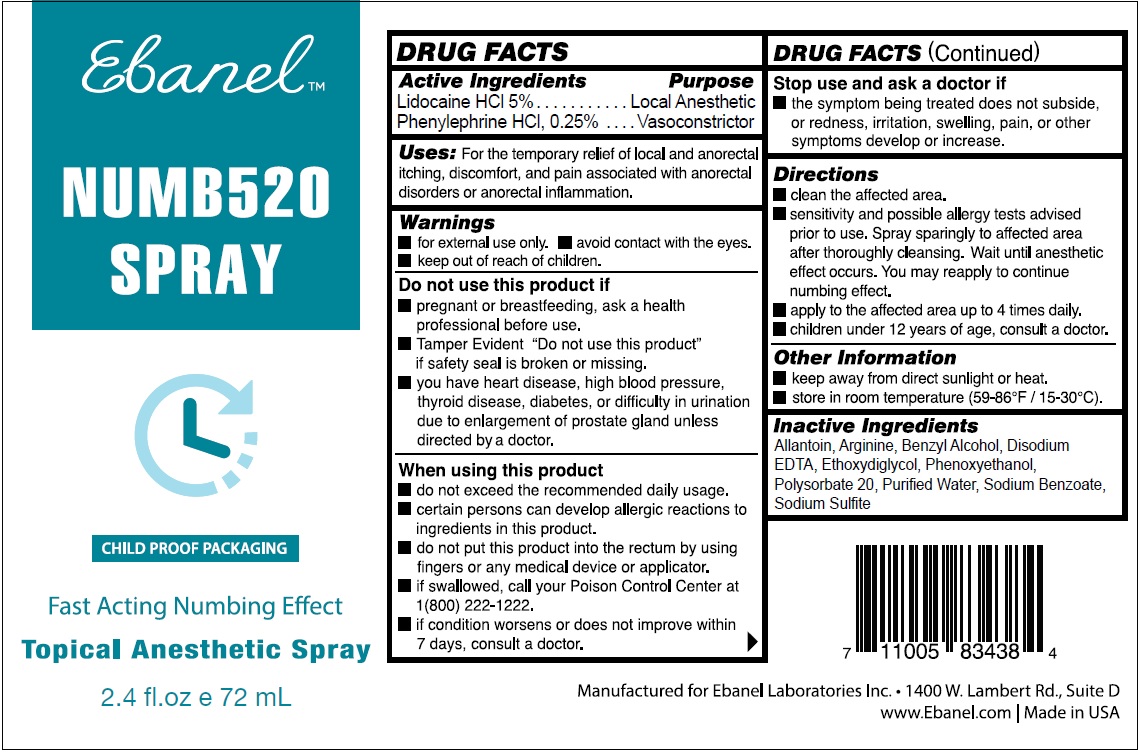
What is Numb520 | Lidocaine Hydrochloride, Phenylephrine Hydrochloride Spray used for?
Brief: Local Anesthetic Vasoconstrictor
Is using Numb520 | Lidocaine Hydrochloride, Phenylephrine Hydrochloride Spray safe or dangerous while breastfeeding?
Numb520 | Lidocaine Hydrochloride, Phenylephrine Hydrochloride Spray Breastfeeding Analsys
Lidocaine while Breastfeeding
SafeCAS Number: 137-58-6
Compatible with breastfeeding no matter the multiple ways it can be used: anesthetic, anti-arrhythmic, or anti-epileptic drug. Excreted into breast milk in non-significant amount with no side effects on breastfed infants from treated mothers. As a topical anesthetic (dermatologic, dental-stomatologic, ophtalmotologic and otologic preparations) it has an almost nil systemic absorption. Avoid using it on the nipple, but if necessary do it after the breast feed, wipe it out and rinse with water before the next feed, An euptectic mixture with added Prilocaine (EMLA) is used for dermatologic anesthesia. There is an increased risk of Methemoglobinemia when applied on large surfaces or taken by mouth. Intrapartum anesthesia may delay the onset of phase II of Lactogenesis or milk coming-in. The American Academy of Pediatrics rates it usually compatible with Breastfeeding.
Phenylephrine while Breastfeeding
Low RiskCAS Number: 59-42-7
Used on topical decongestant solutions for nose drops at low concentration. 10% midriatic eye drops are available. Because low concentration is used on nose and ophtalmic drops a significant excretion into breast milk is unlikely. Low oral biodisponibility minimizes any risk of harmful effect in the infant. Authorized for nasal or ophtalmic use on children aged younger than 1 year. Although on latest update relevant data on breastfeeding was not found it is considered to be safe when minimal dose is used. Avoid excessive or long term use. A related drug Pseudoephedrine can inhibit milk production. It would be advisable to press on the lachrimal sac to minimize absorption.
Numb520 | Lidocaine Hydrochloride, Phenylephrine Hydrochloride Spray Breastfeeding Analsys - 2
Lidocaine while Breastfeeding
CAS Number: 137-58-6
Lidocaine concentrations in milk during continuous IV infusion, epidural administration and in high doses as a local anesthetic are low and the lidocaine is poorly absorbed by the infant. Lidocaine is not expected to cause any adverse effects in breastfed infants. No special precautions are required.[1][2][3] Lidocaine labor and delivery with other anesthetics and analgesics has been reported by some to interfere with breastfeeding. However, this assessment is controversial and complex because of the many different combinations of drugs, dosages and patient populations studied as well as the variety of techniques used and deficient design of many of the studies. Overall it appears that with good breastfeeding support epidural lidocaine with or without fentanyl or one of its derivatives has little or no adverse effect on breastfeeding success.[4][5][6][7][8] Labor pain medication may delay the onset of lactation.
Phenylephrine while Breastfeeding
CAS Number: 59-42-7
The oral bioavailability of phenylephrine is only about 40%,[1] so the drug is unlikely to reach the infant in large amounts. However, intravenous or oral administration of phenylephrine might decrease milk production. Because no information is available on the use of oral phenylephrine during breastfeeding, an alternate drug may be preferred, especially while nursing a newborn or preterm infant.Phenylephrine nasal spray or ophthalmic drops are less likely to decrease lactation. To substantially diminish the effect of the drug after using eye drops, place pressure over the tear duct by the corner of the eye for 1 minute or more, then remove the excess solution with an absorbent tissue.
I already used Numb520 | Lidocaine Hydrochloride, Phenylephrine Hydrochloride Spray and meanwhile I breastfed my baby should I be concerned?
During whole lactation period you shall first discuss with your doctor and then together you shall decide whether you shall take that drug or not however if you have already taken Numb520 | Lidocaine Hydrochloride, Phenylephrine Hydrochloride Spray then you shall inform your doctor, But you should not be worried too much as Numb520 | Lidocaine Hydrochloride, Phenylephrine Hydrochloride Spray comes in category of low risk drug.
My doctor has prescribed me Numb520 | Lidocaine Hydrochloride, Phenylephrine Hydrochloride Spray, what should I do?
Though Numb520 | Lidocaine Hydrochloride, Phenylephrine Hydrochloride Spray dose not comes in category of safe drugs rather it comes in category of low risk but if your doctor is aware that you are breastfeeding your baby and has still recommended it then its advantages must be outweighing the risks.
If I am using Numb520 | Lidocaine Hydrochloride, Phenylephrine Hydrochloride Spray, will my baby need extra monitoring?
Not much
Who can I talk to if I have questions about usage of Numb520 | Lidocaine Hydrochloride, Phenylephrine Hydrochloride Spray in breastfeeding?
US
National Womens Health and Breastfeeding Helpline: 800-994-9662 (TDD 888-220-5446) 9 a.m. and 6 p.m. ET, Monday through Friday
UK
National Breastfeeding Helpline: 0300-100-0212 9.30am to 9.30pm, daily
Association of Breastfeeding Mothers: 0300-330-5453
La Leche League: 0345-120-2918
The Breastfeeding Network supporter line in Bengali and Sylheti: 0300-456-2421
National Childbirth Trust (NCT): 0300-330-0700
Australia
National Breastfeeding Helpline: 1800-686-268 24 hours a day, 7 days a week
Canada
Telehealth Ontario for breastfeeding: 1-866-797-0000 24 hours a day, 7 days a week