
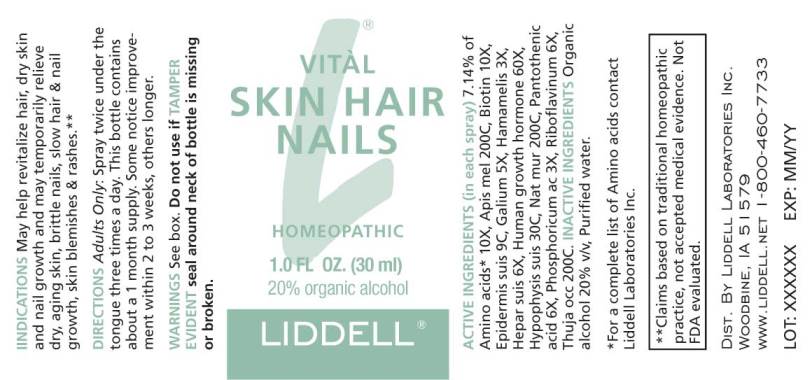
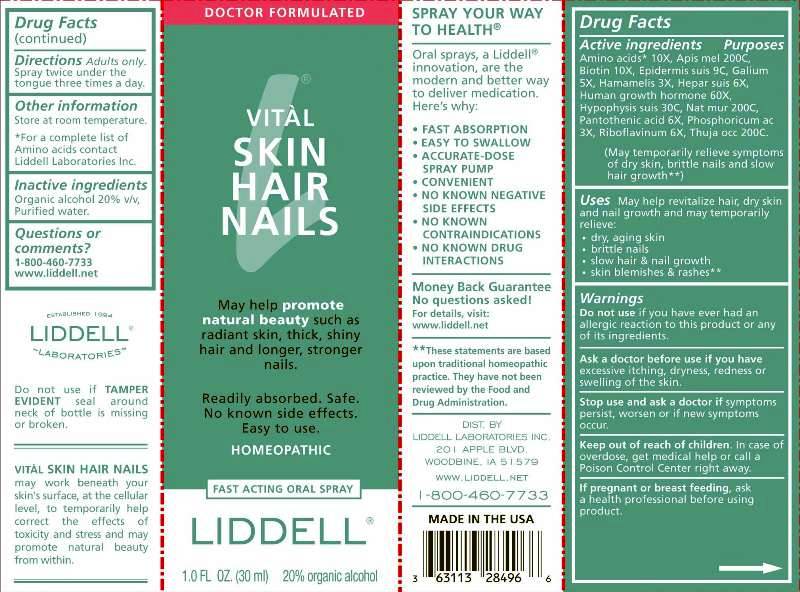
Vital Skin Hair Nails while Breastfeeding
What is Vital Skin Hair Nails used for?
Is Vital Skin Hair Nails usage safe while breastfeeding? If a lactating mother is using it can there be any effect on growth or development of infant?

Vital Skin Hair Nails Breastfeeding Analsys
Arginine while Breastfeeding
SafeCAS Number: 74-79-3
Amino acid which is present in meat and dairy products. It induces stimulation of Nitric Oxide production (vasodilation) and release of Insulin and Growth Hormone. Attributed benefit on health not confirmed. On latest update relevant data on breastfeeding was not found. Possibly not harmful while breastfeeding if abusive and continuous use is avoid.
Levocarnitine while Breastfeeding
SafeCAS Number: 406-76-8
Amino acid that is present in many foods, among them the milk. Indication is the treatment of Primary Deficiency of Carnitine, or, Secondary Deficiency due to Hemolysis, Myocardiopathy and other diseases. Only Levocarnitine is effective as a supplement, with the consumption of D-carnitine regarded as a risk for deficiency. Normal levels in the milk are not modified by the consumption of supplements of Carnitine. Mean concentration level within the first month is about 10 to 12 mg/L, with lower levels in the next following months. The supplementation with Carnitine of the milk for premature infants does not improve their weight increment, with no proof of a beneficial effect.
Isoleucine while Breastfeeding
SafeCAS Number: 73-32-5
Leucine, isoleucine and valine are essential amino acids which are not produced by the body and must be ingested from the diet.They are found in large amount in muscles of meat and are necessary for synthesis of proteins in the body.They are wasted during liver disorders, high catabolic processes (cancer, burns) and also used for dietary supplementation in sport and fitness. At latest update no published data on excretion into breast milk were found.Around 20 amino acids (8 of them are essential) are normally present in breastmilk to which they reach through a selective-transport system of alveolar mammary epithelium (Ramirez 2001) with higher concentrations observed in the milk of obese mothers ( De Luca 2016).Its concentration is higher in the plasma of both mother and newborn after vaginal delivery than after cesarean section. (Schulpis 2009).BCAA supplementation does not alter the levels of prolactin (Bianchi 1992). These are natural components of the body that are devoid of toxicity even at higher doses than those recommended (AESAN 2012) without harmful effect while breastfeeding.
Leucine while Breastfeeding
SafeCAS Number: 61-90-5
Leucine, isoleucine and valine are essential amino acids which are not produced by the body and must be ingested from the diet.They are found in large amount in muscles of meat and are necessary for synthesis of proteins in the body.They are wasted during liver disorders, high catabolic processes (cancer, burns) and also used for dietary supplementation in sport and fitness. At latest update no published data on excretion into breast milk were found.Around 20 amino acids (8 of them are essential) are normally present in breastmilk to which they reach through a selective-transport system of alveolar mammary epithelium (Ramirez 2001) with higher concentrations observed in the milk of obese mothers ( De Luca 2016).Its concentration is higher in the plasma of both mother and newborn after vaginal delivery than after cesarean section. (Schulpis 2009).BCAA supplementation does not alter the levels of prolactin (Bianchi 1992). These are natural components of the body that are devoid of toxicity even at higher doses than those recommended (AESAN 2012) without harmful effect while breastfeeding.
Lysine while Breastfeeding
SafeCAS Number: 56-87-1
Lysine is an essential amino acid that is not produced by the body and must be taken from the diet.It is found in large amount in legumes, cereals, red meat, sea fish, cheese and eggs. It is crucial for the synthesis of proteins in the body and multiple metabolic functions.Often used as a dietary supplement without scientific evidence that would support any benefit of it. Breastmilk contains it naturally with a highest concentration in the colostrum followed by a decrease within the first month after birth (Harper 1984, 1986 Janas, Spevacek 2015).The concentration of lysine together with other amino acids and proteins is higher in the milk of mothers of preterm infants than in mothers of term infants (Atkinson 1980).Pasteurization slightly decreases the concentration of lysine and other amino acids (Silvestre 2006, Valentine 2010) but increases the amount of bioavailable lysine (Baro 2011). It is excreted into breast milk in clinically non-significant amount (0.5% of the administered dose) and as a part of proteins (Irving 1988, Thomas 1991).When used as a supplementation is considered to be safe during breastfeeding (Amir 2011, The Royal Women's Hospital Fact Sheet 2013)
Methionine while Breastfeeding
Low RiskCAS Number: 63-68-3
Aminoacid used in the DL form to treat paracetamol intoxications. Also found in combination with other aminoacids in parenteral nutrition fluids.
Tryptophan while Breastfeeding
Low RiskCAS Number: 73-22-3
Essential amino acid that is not produced by the body and must be taken from the diet.It is naturally found in many proteins of animal and plant origin (eggs, milk, cheese, soy, marine fish, nuts).It is a precursor of serotonin (George 1989, Yurcheshen 2015) through its metabolite 5-HTP or Oxitriptan (see card) and is credited with antioxidant properties (Tsopmo 2009).There is no conclusive scientific evidence that tryptophan supplements are effective on depression, insomnia, attention deficit, other diseases or improvement of physical performance (Yurcheshen 2015).It has been associated to a serious outbreak of Eosinophilia-Myalgia Syndrome with more than 1,500 cases and 37 deaths occurring in the 1990s, possibly caused by contaminated or poorly prepared batches of tryptophan (Falk 2011, Allen 2011, Sachs 2013, Yurcheshen 2015, Mediine Plus 2015). The FDA has launched a precautionary measure by withdrawing it from the market for years. At high doses it may cause side effects that are harmful to health (Fernstrom 2012). Tryptophan is a natural component of breast milk, with higher concentration in colostrum than in mature milk (Zarando 1989, Kamimura 1991) which is believed to have a circadian rhythm that regulates the sleep pattern and behavior of the infant ( Heine 1995, Cubero 2005).By taking tryptophan or alpha-lactalbumin (a high tryptophan-containing protein) tryptophan levels in breast milk is not increased (Dowlati 2015), but plasma prolactin concentration doest it (Chaney 1982, Cowen 1985) . With a comprehensive diet, tryptophan supplements are not needed at all, as their effectiveness has not been proven yet in any disease or disorder.Whenever used, a moderate consumption is recommended, making sure a reliable source since poisoning has been reported in the past.
Valine while Breastfeeding
SafeCAS Number: 72-18-4
Leucine, isoleucine and valine are essential amino acids which are not produced by the body and must be ingested from the diet.They are found in large amount in muscles of meat and are necessary for synthesis of proteins in the body.They are wasted during liver disorders, high catabolic processes (cancer, burns) and also used for dietary supplementation in sport and fitness. At latest update no published data on excretion into breast milk were found.Around 20 amino acids (8 of them are essential) are normally present in breastmilk to which they reach through a selective-transport system of alveolar mammary epithelium (Ramirez 2001) with higher concentrations observed in the milk of obese mothers ( De Luca 2016).Its concentration is higher in the plasma of both mother and newborn after vaginal delivery than after cesarean section. (Schulpis 2009).BCAA supplementation does not alter the levels of prolactin (Bianchi 1992). These are natural components of the body that are devoid of toxicity even at higher doses than those recommended (AESAN 2012) without harmful effect while breastfeeding.
Biotin while Breastfeeding
SafeCAS Number: 58-85-5
It is an essential co-enzyme for fat metabolism and other metabolic reactions, which is classified among the vitamin B group. Recommended daily allowance is 10 to 200 μg according to some authorities and 30 to 100 μg to some others. (5 at15 μg for infants, 20 to 30 μg for children, 30 μg for pregnant women and 35 μg for lactating mothers). Biotin is found in the non-fat fraction of breast milk in an amount of 5 to 9 μg/L. Biotin is widely distributed in most foods with a very rare occurrence of deficiency among people who are on adequate diet, nor any case of intoxication is known even with higher doses than recommended for daily intake. At date of latest update, relevant data related to breastfeeding were not found. However, because lack of toxicity a risk due to consumption at recommended dose is unlikely. With an adequate and comprehensive diet, the consumption of vitamin supplementation is not necessary.
Hamamelis virginiana root bark/stem bark while Breastfeeding
SafeCAS Number: 68916-39-2
Leaves of the plant and sometimes bark also are used. It contains tannins, pro anthocyanidins and flavonic heterosides (quercitrin, isoquercitrin). Venous-tonic and anti-inflammatory properties have not been well established. The Commission E of the German Ministry of Health authorizes its use locally and by suppositories.
Somatropin while Breastfeeding
Low RiskCAS Number: 12629-01-5
We are working on a comment for this product.
Sodium chloride while Breastfeeding
SafeCAS Number: 7647-14-5
Sodium chloride either as cooking salt, or, as oral rehydration solution, or, as IV fluid, is entirely compatible with BF.
Pantothenic acid while Breastfeeding
SafeCAS Number: 79-83-4
Pantothenic acid, dexpanthenol or vitamin B5 is widely distributed in nature being very abundant in meat, vegetables, cereals, legumes, eggs, milk, fruit and vegetables (MedlinePlus 2015), therefore its deficiency is very rare. The only recognized indication for administering pantothenic acid is to treat vitamin B5 deficiency. There is no evidence that it can be used to treat any other disease or condition. (MedlinePlus 2015). Daily requirements are 2 mg in infants, 4 in children, 5 in adults, 6 in pregnant women and 7 mg in breastfeeding mothers (Ares 2015, MedlinePLus 2015). Pantothenic acid is excreted in breast milk at a concentration of 2 to 2.7 mg/L (Sakurai 2005, Song 1984) with little variation throughout breastfeeding (Ren 2015, Johnston 1981) and is directly proportional to maternal ingestion (Song 1984, Johnston 1981). The concentration is higher in milk of mothers of premature babies than in full-term infants (Ford 1983). With a varied and balanced diet, supplements of this vitamin are not needed during breastfeeding, it is enough to adequately select the food in one’s diet (Song 1985). Topical use, most commonly used as panthenol or provitamin B5, regardless of its questionable efficacy, is compatible with breastfeeding.
Riboflavin while Breastfeeding
SafeCAS Number: 83-88-5
A balanced and comprehensive diet make it vitamin supplementation useless.
Vital Skin Hair Nails Breastfeeding Analsys - 2
Levocarnitine while Breastfeeding
CAS Number: 541-15-1; 3040-38-8;
Levocarnitine and acetyl-l-carnitine (acetlycarnitine) are normal components of human milk that are required for fat metabolism. The body can use only levocarnitine, and dextrocarnitine can be an antagonist of levocarnitine. Acetyl-l-carnitine, and propionyl-l-carnitine can be converted to levocarnitine by the body. The bioavailability of levocarnitine is less than 20%, but acetylcarnitine and propionlycarnitine may be higher. These substances have no specific lactation-related uses. Within the normal range of dietary intake, excretion of levocarnitine into breastmilk is relatively constant. Women with carnitine deficiency appear to secrete insufficient amounts of carnitine into their breastmilk for their breastfed infants, who may require levocarnitine supplementation.[1] Preterm infants are often deficient in levocarnitine and require supplementation.[2] No data exist on the safety and efficacy levocarnitine supplementation in nursing mothers or infants without carnitine deficiency. Levocarnitine and its derivatives are generally well tolerated in adults with occasional gastrointestinal upset and restlessness. A fishy odor to the breath, sweat and urine has been reported. Although data are very limited, poor bioavailability might limit absorption by the breastfed infant. It appears unlikely that maternal levocarnitine supplements during nursing would be harmful to the infant, but until more data are available, it is probably best to avoid levocarnitine supplementation unless it is prescribed by a healthcare professional. Pasteurization (method not stated) had little effect on the concentration of endogenous carnitine in one study. Pasteurization followed by refrigeration at 5 degrees C for 48 hours reduced the carnitine concentration by about 13%.[3]
Somatropin while Breastfeeding
CAS Number: 12629-01-5
Limited data indicate that exogenous somatropin does not increase normal breastmilk concentrations of growth hormone and that no adverse effects are experienced by the breastfed infants of mothers who receive somatropin. Small studies by one group of investigators found that milk output increases from 19% to 36% after a 7-day course of somatropin. Because mothers were not given extensive breastfeeding support in these studies, the usefulness of the drug as a galactogogue in mothers given adequate breastfeeding support is not known. Galactogogues should never replace evaluation and counseling on modifiable factors that affect milk production.[1] Based on theoretical considerations, the manufacturer of Zomacton 5 mg recommends avoiding the use of the diluent, which contains benzyl alcohol, for lactating women. Instead use preservative-free normal saline as a diluent and discard any remaining drug.
Vital Skin Hair Nails Breastfeeding Analsys - 3
Pork liver and Breastfeeding
SafeIf consumed moderately liver and various organ meats are compatible in breast feeding.
Phosphoric acid and Breastfeeding
SafeNext to calcium, phosphorus is the most abundant mineral in the body, making up about 1% of total body weight. Calcium, which gives strength to bones and teeth, needs to be combined with another mineral, such as phosphorous, to become stabilized before it can be effective.
Phosphorus also helps to release energy from food as it plays an important role in the metabolism of carbohydrate, fat and protein. Phosphorus is naturally found in many food sources and phosphorus supplementation while breastfeeding is mostly safe.
You can easily get all the phosphorus you need from a well-balanced diet (even though most prenatal vitamins dont contain phosphorus). For example, 2 cup of yogurt provides nearly all your phosphorus for the day.
Warning: Consuming high doses of phosphorus for a short time can cause diarrhea or stomach pain. The long term over-consumption of foods high in phosphorus can deplete calcium resources and lead to reduced bone mass, which means that bones are more likely to fracture.Thuja occidentalis leafy twig and Breastfeeding
Low RiskThuja is one of the most common remedies used for warts. Topical Usage of Thuja for wart is likely safe while breastfeeding. We do not have sufficient safety usage data for Thuja oral consumption, However its likely unsafe to use thuja orally while breastfeeding.
Warning: Tropical usage in breast area shall be avoided to prevent the Thuja passing orally in Infants.What should I do if already breastfed my kid after using Vital Skin Hair Nails?
Due to high dilution of ingredients in homeopathic medicines they do not create much problem for baby. Vital Skin Hair Nails is a homeopathic medicine and if your baby does not have any abnormal symptoms then there is nothing to worry about. Be careful with too much usage of ethanol based homeopathic medicines during breastfeeding.
I am nursing mother and my doctor has suggested me to use Vital Skin Hair Nails, is it safe?
Homeopathic medicines are usually safe in breastfeeding and if Vital Skin Hair Nails has been recommended by doctor then there should be no concern about its usage in breastfeeding.
If I am using Vital Skin Hair Nails, will my baby need extra monitoring?
Not exactly.
Who can I talk to if I have questions about usage of Vital Skin Hair Nails in breastfeeding?
US
National Womens Health and Breastfeeding Helpline: 800-994-9662 (TDD 888-220-5446) 9 a.m. and 6 p.m. ET, Monday through Friday
UK
National Breastfeeding Helpline: 0300-100-0212 9.30am to 9.30pm, daily
Association of Breastfeeding Mothers: 0300-330-5453
La Leche League: 0345-120-2918
The Breastfeeding Network supporter line in Bengali and Sylheti: 0300-456-2421
National Childbirth Trust (NCT): 0300-330-0700
Australia
National Breastfeeding Helpline: 1800-686-268 24 hours a day, 7 days a week
Canada
Telehealth Ontario for breastfeeding: 1-866-797-0000 24 hours a day, 7 days a week